
As the business head of Trent Hypermarket, Neville ensures that customers receive high-quality products that adhere to Tata standards.

"I do not want India to be an economic superpower. I want India to be a happy country." - JRD Tata

Three disappointing experiences with Tata companies made me question whether the group's historic values of customer focus and accountability are slowly fading, notes Dr N Ravichandran.

In a country where wearing lipstick could still invite disapproval, Simone Tata understood that Lakmé's future depended on shifting attitudes.
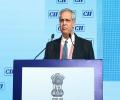
'The quality of a leader should be such that even if the leader is not there, the institution carries on.'

To me he always symbolised the sincere, confident, face of a Bharat whose rise is unstoppable. Ratan Tata was a Rishi who was unquestioningly trusted by people who never saw him and never met him, asserts Tarun Vijay, the former BJP MP.

Ratan Tata was one of the world's most influential industrialists yet he never appeared on any list of billionaires. He controlled over 30 companies that operated in over 100 countries across six continents yet lived an unpretentious life. Ratan Naval Tata, who died at a Mumbai hospital on Wednesday night at the age of 86 years, enjoyed a perhaps unique status -- a corporate titan who was considered a 'secular living saint' with a reputation for decency and integrity.

Russi M Lala, 82, celebrated chronicler of Tata Group stories, has seen the top leadership for two generations very closely. He was JRD Tata's biographer and also director of Tata's premier foundation, the Dorabji Tata Trust, for 18 years. He talks about the new leadership and what it means for the Group.
Willingness to bet on your team is perhaps the simplest way to win the lifelong loyalty of your people, and let the world know that you possess one of the rarest of all leadership qualities -- the ability to inspire unshakeable loyalty, a precious asset in today's dog-eat-dog world.
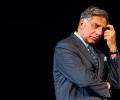
What would happen to the ownership after Ratan Tata? The succession plan for the 263,862 Tata Sons promoter shares owned by seven Tata Trusts and other holdings of Tata brothers? Would a younger family member inherit?

If Cyrus's protestations of having no knowledge of his imminent dismissal are to be taken at face value, he was extraordinarily naive and insulated from the ground reality. There were enough straws in the wind to suggest that his relations with Ratan were fast deteriorating to a point of no return.
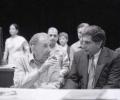
An exclusive excerpt from The Tatas: How A Family Built A Business And A Nation.
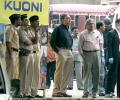
'When the bombing happened in the Taj Mahal hotel in 2008, that was a very sad moment, but he really took care of the people, took care of everybody and that was when you saw some of his best moments.' 'There are some things which we will never forget. That is when the best of a person comes out.'
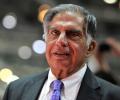
'I think Ratan felt he had to do everything that he could to retain control of the company started by his forefathers, because that was the first priority and nothing else mattered compared to that.'

Ratan Tata was the first one to realise that Indian companies had become a prisoner to tradition and needed to radically innovate.

With a net worth of $12.6 billion, Mistry is well known for constructing some of Mumbai's landmarks such as the Reserve Bank of India headquarters, The Taj Mahal Palace and Towers, and the Oberoi Hotels

'Not many know that Ratan Tata became chairman of Tata Sons because of Cyrus's father Pallonji Mistry. But he (Cyrus) never used it or leveraged it to his benefit.'

The Tata empire turns 150 this year. R Gopalakrishnan, former director, Tata Sons Ltd, imagines a conversation among the group's founder Jamsetji, his son Dorabji, his successor, Nowroji Saklatwala, and his successor, J R D Tata.
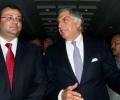
'And he was really trying just to do the best by the shareholders, and by the laws of India.'

'Cyrus was always very different. He would think before acting.'

The inaugural flight took off in the presence of Minister of State for Civil Aviation, Mahesh Sharma, along with a number of other people.

One should appreciate the sagacity and audacity of JRD and Nani Palkhivala in founding TCS on April 1, 1968. At that time there was no Microsoft or Intel, SAP or Accenture, much less Google.
They needed a person who could build and execute their vision: A frontiersman; a problem solver and an institution builder. It was their and India's good fortune that Faqir Chand Kohli more than measured up to their requirements and indeed laid the foundation to take TCS to unimaginable heights and to the giant success that it is today. Shivanand Kanavi salutes the incomparable F C Kohli, who passed into the ages last week.

These Indian companies truly defined the essence of entrepreneurship.
 © 2026 Rediff.com - Advertise with us - Disclaimer - Privacy Policy - Sitemap - Feedback - About us - Terms of use - Grievances